Multi-Site Healthcare Operations: A Comprehensive Guide to Patient Outreach, Clinical Communications, and Environmental Branding
Running one clinic well is hard enough. Running fifty, or five hundred, is a different problem entirely.
Hospital networks, health systems, physician groups, and urgent care chains are expanding faster than most teams can keep pace with. Every new location adds another set of vendors, another local team ordering its own materials, and another point where patient data, brand standards, or both can quietly slip out of control. What starts as healthy growth can just as easily turn into inconsistent signage, mismatched patient collateral, and a compliance picture no one at corporate can fully see.
This guide walks through what's actually driving that fragmentation, where the real risk hides, and what a centralized approach to patient outreach, clinical communications, and environmental branding looks like in practice. Along the way, we'll point to the specific solutions and stories from Prisma's healthcare marketing and printing work that show how it plays out for real health systems.
In this guide:
- The complexity of multi-site healthcare branding and operations
- Safeguarding patient privacy and maintaining brand governance
- Precision patient marketing, direct mail, and data analytics
- Patient welcome kits, clinical communications, and provider support
- Signage, environmental graphics, and facility operations
- Operational checklist for healthcare leaders
- Enterprise healthcare success stories
The Complexity of Multi-Site Healthcare Branding and Operations
Why Decentralized Marketing Breaks Down at Scale
Most multi-site health systems didn't set out to build a fragmented marketing operation. It happened one acquisition, one new clinic, and one well-meaning local manager at a time. Each site orders its own signage, prints its own patient handouts, and works with whichever local print shop is fastest or cheapest. Individually, none of these decisions looks risky. Collectively, they add up to inconsistent print quality from one location to the next, administrative friction every time corporate tries to launch something system-wide, duplicated spend across dozens of vendor relationships, and a brand that looks different depending on which care site a patient walks into.
The Fragmented Vendor Bottleneck
The typical multi-site health system is juggling separate suppliers for commercial print, environmental signage, patient onboarding kits, direct mail, recruitment packages, and branded merchandise. Every one of those vendor relationships is its own contract, its own quality standard, and its own potential point of failure. When a new clinic opens, materials arrive on five different timelines from five different suppliers (if they arrive at all). When corporate wants to update a template system-wide, it means five separate conversations instead of one. And because no single vendor owns the full picture, no single vendor is accountable when something goes wrong.
The Centralized Advantage
The alternative is to consolidate print production, environmental graphics, patient communications, direct mail, and site fulfillment into a single automated platform. Prisma's Dokshop brand management platform was built for exactly this problem: a single digital asset library and ordering portal that gives every location access to on-brand, pre-approved materials without routing every order through corporate. Health systems using this model see fewer compliance gaps, less inventory waste sitting in a supply closet, faster deployment when a new site opens, and a brand that looks the same whether a patient is in the flagship hospital or the newest satellite clinic three states away.
Safeguarding Patient Privacy and Maintaining Brand Governance
Enterprise Compliance Standards
Inconsistent, localized printing isn't just a brand problem, it's a privacy problem. When individual clinics or departments manage their own print and mail processes, there's no consistent way to guarantee that Protected Health Information (PHI) is being handled correctly at every step. A single mishandled mailing or improperly secured print file can expose patient records and, with them, the trust patients place in a health system. Unifying baseline HIPAA privacy standards, SOC-aligned security protocols, and corporate governance across every location closes that gap. It means every localized mailing and every clinic document, regardless of which site produced it, is held to the same standard.
Mitigating Supply Chain Privacy Risks
Every handoff between a health system and an outside vendor is a potential security touchpoint—a file transfer, a shared drive, a courier, a print run sitting on a loading dock. The more vendors involved across print, signage, and mailing, the more touchpoints there are, and the harder it becomes to trace where a breach might have originated. Consolidating print, fulfillment, and mail operations under one HIPAA-compliant partner eliminates most of those handoffs.
Prisma's facilities are backed by HITRUST certification and full HIPAA compliance, which also has a practical benefit beyond risk reduction: it dramatically simplifies state and federal health system audits, since there's one documented process to review instead of a dozen.
Balancing Central Governance with Local Flexibility
None of this should come at the cost of local responsiveness. The health systems that get this right use enterprise-approved templates that let hospital administrators, clinic managers, and regional marketing teams customize location-specific materials within preset budget caps, without ever touching core brand standards or compliance requirements. That's the balance Dokshop is designed to strike: corporate maintains governance and approval controls, while local teams retain the autonomy to order what they need, when they need it.
See how The Joint Chiropractic uses dokshop to give hundreds of locations local ordering flexibility without sacrificing brand control.
Precision Patient Marketing, Direct Mail, and Data Analytics
Personalization and Direct Mail Analytics
Generic mailers get ignored. Personalized, data-informed outreach gets appointments booked. Variable Data Printing (VDP) allows a health system to change the text, offer, or imagery on every single piece in a mail run based on who's receiving it — a preventive screening reminder for one household, a new-patient welcome offer for another.
Paired with direct marketing data analytics, that personalization gets sharper over time: campaigns can be targeted at the demographics most likely to convert, regional practice growth can be tracked location by location, and marketing spend can be tied back to something concrete—appointments booked, not just mailers sent.
Neighborhood Targeting and EDDM for Clinic Openings
When a new clinic or service line launches, the goal is usually simple: get as many nearby households as possible aware of it, fast. Every Door Direct Mail (EDDM) and ZIP-code saturation campaigns are built for exactly that, flooding a defined local radius with a grand-opening announcement without needing a purchased mailing list.
Prisma's direct mail solutions combine EDDM with demographic targeting, so a system-wide expansion doesn't have to mean a system-wide marketing headache; each new site gets its own localized launch campaign, deployed and tracked centrally.
Automating Zero-Defect Document Assembly
In most industries, a mail-assembly error is an inconvenience. In healthcare, it's a HIPAA breach. A lab report, billing statement, or physician notice going to the wrong household is a reportable incident, not a typo. That's why high-speed 2D barcode optical cameras at the inserter level matter: every personalized document is scanned and cross-verified against its intended envelope before sealing, so a mismatch is caught before it ever leaves the facility. It's a small piece of hardware doing a lot of quiet, essential work—guaranteeing zero patient data mix-ups on every run, not just most of them.
Patient Welcome Kits, Clinical Communications, and Provider Support
Architecting the Patient Experience Kit
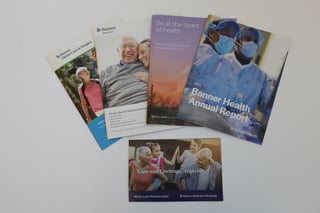
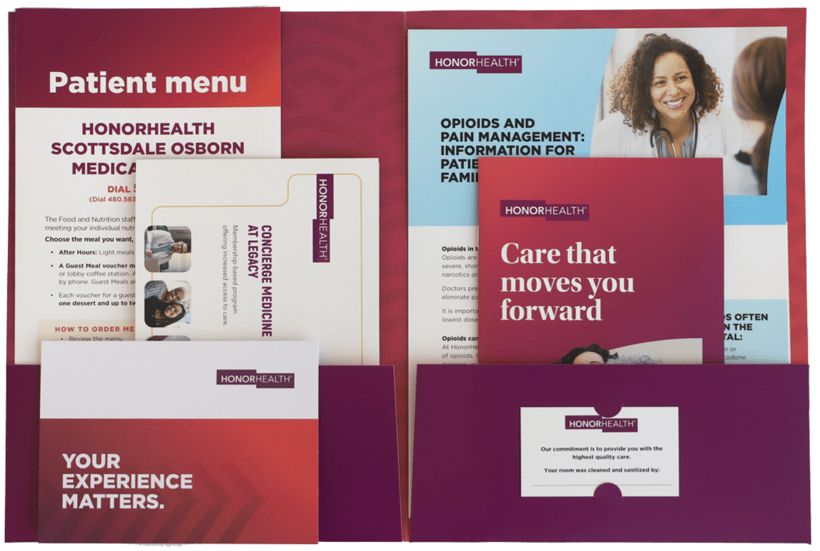
A new patient's first real interaction with a health system is rarely the appointment itself. It's the paperwork, the brochures, and the instructions that land in their hands beforehand. When those materials are scattered, mismatched, or confusing, they quietly undercut the trust a system is trying to build before the patient ever sits down with a provider. Structuring that experience into a single, cohesive onboarding package—welcome letter, care guide, telehealth instructions, a small piece of branded merchandise—does more than look organized. It signals, from day one, that this is a system that has its act together.
Designing Clinical Materials for Clarity and Adherence
Care guides, post-discharge instructions, and billing breakdowns are often the least designed, most important documents a patient receives. Dense medical language and cluttered layouts lead directly to missed follow-up appointments and confused billing disputes. Applying real visual hierarchy, including clear headers, digestible steps, and plain language to these materials, isn't a cosmetic upgrade. It's directly tied to whether a patient actually follows their discharge instructions and how a system scores on patient satisfaction surveys.
Provider Support and Recruitment Kits
Patient-facing materials get most of the attention, but internal consistency matters just as much. Standardized physician recruitment packets, onboarding toolkits, clinical compliance packets, and training guides ensure that a new provider joining site twelve receives the same quality of materials and clear expectations as one joining the flagship location.
Accessibility, Language Services, and Inclusive Patient Communications
A health system's patient population is rarely monolingual, fully sighted, or uniformly literate in medical jargon, and its communications shouldn't assume otherwise.
- Multilingual translation for intake forms, care management instructions, wellness campaigns, and regulatory notices ensures diverse patient populations can actually understand what they're signing and what's being asked of them.
- Large print and Braille production for clinical guides and billing statements meets federal accessibility guidelines and, more importantly, means every patient can engage with their own care independently.
Eliminating Address Errors on Patient Outreach
Even a perfectly designed preventive-care reminder is useless if it bounces back as undeliverable. Pre-scrubbing patient mailing lists through automated CASS standardization and NCOA move-update processing catches outdated addresses before a campaign ever goes out, which does two things at once: it protects USPS deliverability rates on time-sensitive reminders, and it quietly cuts wasted postage spend on mail that was never going to arrive.
Signage, Environmental Graphics, and Facility Operations
Large-Format Visual Graphics and Environmental Signage
Patients navigating an unfamiliar hospital or clinic are already anxious. Confusing or shabby signage makes it worse. Inconsistent wayfinding, mismatched exterior signage, or dated interior graphics erode credibility before a patient even reaches a waiting room. ADA-compliant large-format signage, including wayfinding systems, exterior storefront signs, directional displays, and wall wraps, is one of the most visible yet often overlooked levers a health system has to improve the physical patient experience across every site.
Streamlining New Clinic and Service Center Openings
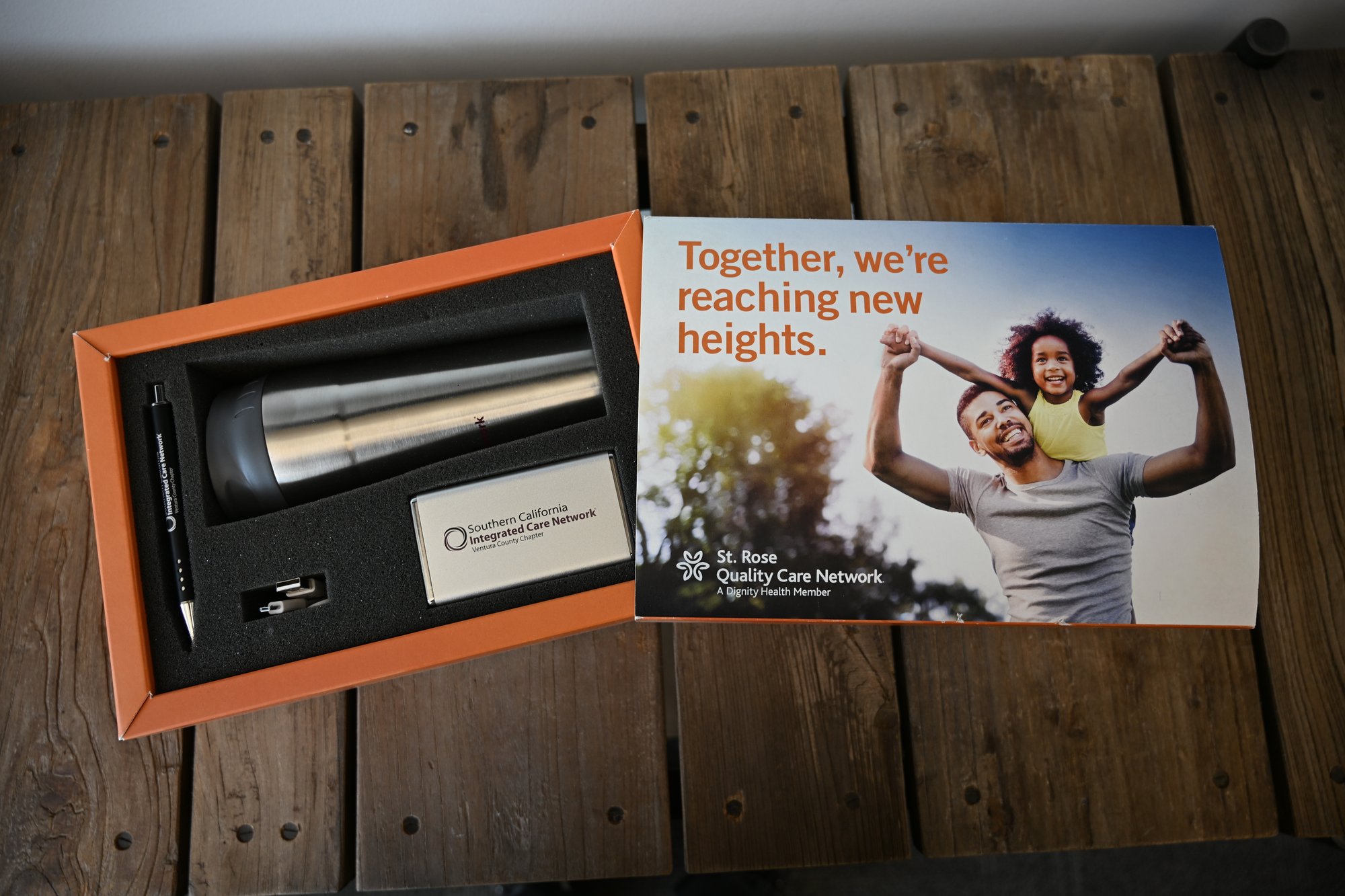
New site launches fail in painfully predictable ways: signage arrives late, welcome kits are missing, and the clinical supply order got lost somewhere between two vendors who don't talk to each other. Pre-assembling comprehensive "site opening kits" (facility signage, marketing collateral, clinical supplies, branded merchandise) into a single, scheduled delivery turns a chaotic multi-vendor scramble into a predictable checklist.
Prisma's kitting and fulfillment logistics capabilities exist specifically to make new-site launches boring in the best possible way: on time, complete, and stress-free.
Supporting Community Events and Health Fairs
Health fairs, community screenings, and local outreach events require the same essential toolkit: portable displays, banners, branded tents, and promotional materials. However, coordinating this across multiple markets presents a significant logistical challenge. Centrally managing, ordering, and shipping event materials means a regional team can request what they need for next month's health fair without reinventing the process every time.
Enterprise Healthcare Success Stories
Frameworks sound great on paper, but it’s always easier to see how this all plays out when real healthcare teams put it into practice.
Restoring Data Security in High-Volume Direct Mail
After experiencing a data breach with a former vendor, a leading home-based care provider needed a secure partner to handle sensitive, high-volume patient mailings. Prisma stepped in with its HITRUST-certified infrastructure and automated PrismaSecure platform, ensuring strict regulatory compliance while maintaining reliable output. Today, Prisma securely delivers over 675,000 mail pieces monthly—ranging from screening letters to personal health summaries—while streamlining local ordering through dokshop to reduce operational costs and protect patient privacy.
Unifying Brand Operations Across 200+ Dialysis Centers
Following a major rebranding with American Renal Associates, Innovative Renal Care (IRC) needed to supply brand assets, print collateral, and apparel to more than 200 dialysis clinics across 27 states. IRC replaced a rigid, manual "group-buy" process with a custom 24/7 dokshop portal, giving local clinic teams on-demand access to pre-approved materials. This transition established a consistent brand experience across all locations, accelerated speed-to-market, and delivered significant cost savings through vendor consolidation.
Frequently Asked Questions
Q: What is EDDM and how is it used in healthcare marketing?
Every Door Direct Mail (EDDM) is a USPS program that lets an organization mail to every address in a defined ZIP-code or carrier-route area without needing a purchased mailing list. Health systems use it most often for clinic openings and service-line launches, where the goal is broad local awareness rather than targeting a specific patient list.
Q: How does centralized print procurement reduce HIPAA risk?
Every vendor handoff in a print or mail process is a potential point of exposure for PHI. Centralizing procurement under one HIPAA-compliant, HITRUST-certified partner reduces the number of those handoffs and ensures a single, auditable security standard applies to every piece of patient communication, regardless of which location it originated from.
Q: What is Variable Data Printing (VDP)?
VDP is a printing method that allows content (text, images, offers) to vary from one printed piece to the next within a single run, based on recipient data. In healthcare marketing, it's what makes personalized appointment reminders or targeted outreach campaigns possible at scale.