Mastering Multi-Store Retail: From Print to In-Store Execution

Growing a retail footprint should feel like momentum. In practice, for most multi-store retailers, it feels like managing 50, 200, or 2,000 small businesses at once, each one ordering its own signage, printing its own promotions, and interpreting "on brand" a little differently.

The National Retail Federation projects that U.S. retail sales will climb 4.4% in 2026 to $5.6 trillion, and store expansion is accelerating right along with it. Coresight Research expects roughly 5,500 new store openings this year alone. That growth is good news for the business and a serious stress test for the marketing supply chain behind it.

Every new door, remodel, and seasonal campaign multiplies the number of vendors, print files, and shipments a corporate marketing team has to coordinate. Left unmanaged, that complexity shows up as mismatched signage, blown co-op budgets, and grand openings that don't quite come together on time. Managed well, it becomes a genuine competitive advantage: consistent brand experiences, faster campaign rollouts, and a supply chain that scales as fast as the store count does.

This guide walks through what it actually takes to run marketing operations across a multi-store retail footprint, from brand governance and store profiling to direct mail, large-format visuals, and national installation, and how Prisma's retail and consumer solutions bring it all under one roof.

The High-Stakes Complexity of Retail & Consumer Operations

The Operational Bottleneck of Multi-Store Growth

Many multi-store retailers did not intentionally design their marketing supply chains; instead, these systems developed organically, location by location and through various acquisitions. This often results in a decentralized model in which individual stores or regional managers independently source signage, order promotional materials, and manage local vendor relationships. While this autonomy may seem efficient in the short term, it can gradually undermine both the brand and the overall profitability.

Decentralized ordering means dozens of print files circulating with no central version control, so window clings ship in last season's blue instead of this season's navy. It means spend that no one at corporate can see until the invoices arrive, and no easy way to compare what one region paid for the same shelf-talker run versus another. And because every store is essentially placing its own order, a national promotion can roll out on time in some markets and two weeks late in others—undermining the whole point of a coordinated campaign.

The Fragmented Vendor Trap

Managing multi-store retail campaigns through fragmented supply chains introduces unnecessary operational risk. Retail operations teams often balance a tangled roster of niche suppliers:

  • Large-Format Graphics: Local sign shops for window displays and banners.
  • Direct Mail & Collateral: Separate commercial printers for targeted mailers and brochures.
  • Merchandise & POS: Branded Merch vendors and display fabricators.
  • Field Installation: Third-party contractor networks for physical setup.

This siloed approach creates critical failure points. Misaligned production timelines between POS displays and marketing collateral lead to partial campaign launches, increased shipping costs across multiple vendors, and zero centralized visibility into fulfillment status.

The Centralized Advantage

Centralizing print production, visual graphics, direct mail execution, kitting, and installation on a single platform removes the friction points created by fragmented vendors. One partner means one set of brand files, one quality standard, one point of accountability for on-time delivery, and one dashboard for spend across every location. It also means campaigns move faster: instead of coordinating five vendors on five timelines, corporate marketing coordinates one production and logistics engine built specifically for multi-location rollouts.

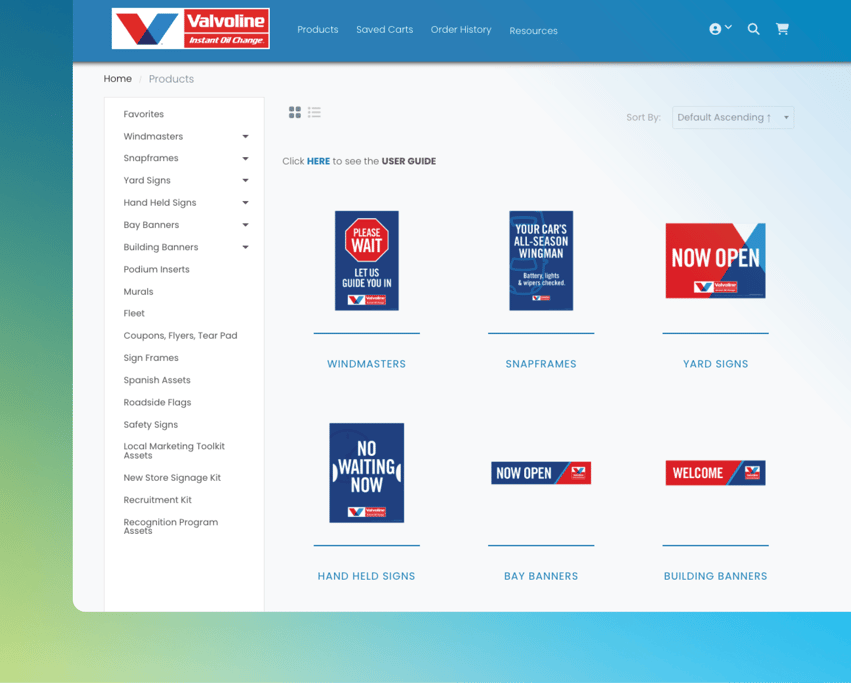
That's the model behind dokshop®, Prisma's centralized ordering and brand management platform, which currently supports more than 280 brands and over 100,000 users across print, signage, branded merch, and apparel from a single online storefront. For a retail organization opening new stores, running seasonal promotions, and managing rebrands simultaneously, that kind of centralization isn't a nice-to-have, it's the difference between a marketing team that scales with the business and one that becomes its biggest bottleneck.

Maintaining Brand Governance While Empowering Local Store Marketing

Enforcing Enterprise Brand Standards Across Channels

Brand consistency isn't just an aesthetic preference, it's measurable. Recent research found that companies who present their brand consistently across every touchpoint can see revenue gains in the double digits, while the same research found that a majority of organizations still struggle with off-brand materials slipping through. For a retailer with dozens of storefronts, that risk multiplies with every location.

Protecting brand equity starts with production. Running signage, collateral, and promotional print through enterprise-grade presses with precise color matching (the same approach Prisma used to solve Paladin's color consistency and substrate waste problems) ensures that every store, regardless of region or format, presents the same visual identity to shoppers.

Balancing Central Control with Local Store Flexibility

The tension every multi-store retailer feels is between control and speed: lock everything down centrally and local managers can't respond to a regional promotion or a legally required local disclosure; open everything up and brand consistency collapses. Dokshop is built to resolve that tension rather than pick a side. Store managers get a self-service portal stocked with pre-approved, lockable templates—collateral in which the layout, colors, and legal language are fixed, but fields such as a local address, manager name, or store hours can be customized on demand.

That structure gives local teams the autonomy to promote their store without ever touching brand-critical elements, and it gives corporate marketing a complete digital asset library they can update once and trust it will apply everywhere. It's the same architecture that lets Dokshop process print-on-demand jobs the same day they're ordered, without sacrificing the guardrails corporate needs.

CTA: Demo Dokshop

Automated Co-Op and Regional Budget Governance

Manual expense approvals and messy spreadsheet tracking slow down regional campaign execution. Modern retail platforms automate financial governance by embedding rules directly into the ordering portal:

  • Custom Spending Caps: Assign monthly or quarterly print budgets per store or region.
  • Multi-Tier Approval Workflows: Automatically route orders exceeding set thresholds to regional managers for review.
  • Co-Op Fund Allocation: Track and manage co-op marketing dollars directly within order checkout workflows for complete financial transparency.

IMG_6828Store Profiling, Kitting, and Turnkey Retail Campaign Rollouts

Eliminating Store-Profiling Inaccuracies

Static distribution lists and outdated Excel spreadsheets are the primary cause of campaign waste. Sending a 60-inch window graphic to a location with a 48-inch storefront results in discarded materials and missing promotional signage. Dynamic store profiling solves this by capturing detailed attributes for every physical store location within a centralized database:

Store Profile Variable

Operational Impact

Physical Dimensions

Fits window graphics, wall wraps, and exterior banners precisely.

Fixture Configurations

Ensures correct count and style for shelf-talkers, endcap headers, and counter displays.

Language & Regional Needs

Automatically routes localized or multi-lingual marketing collateral.

Local Legal Restrictions

Restricts non-compliant promotional signage by municipality.

Executing Flawless Campaign Kitting and Nationwide Rollouts

A national promotion is only as strong as its weakest store's execution. When promotional collateral ships separately or arrives without the pieces a store actually needs, local teams are left improvising, and the launch-day experience varies wildly from one location to the next.

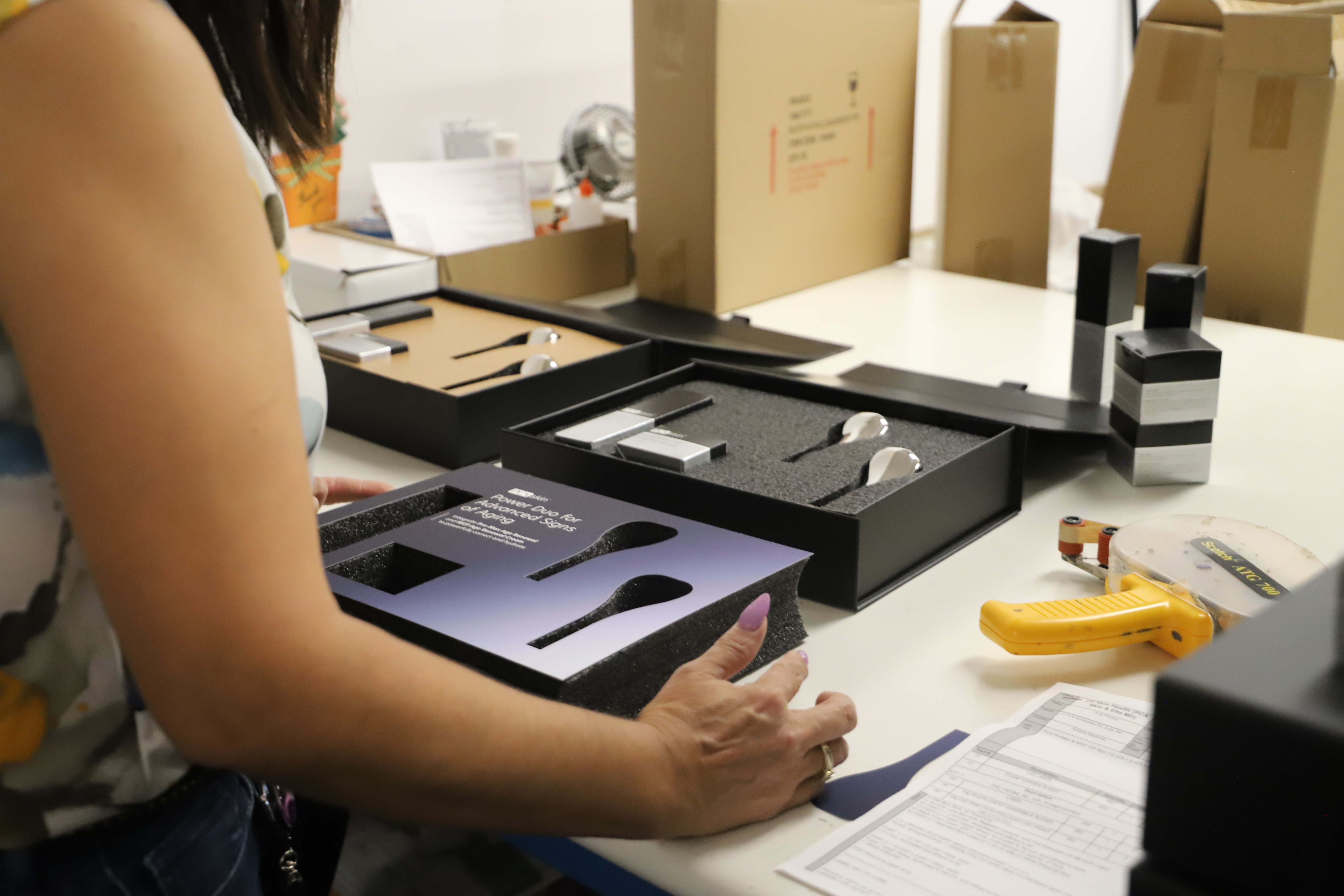
Prisma's kitting and fulfillment team bundles everything a store needs for a given campaign—signage, displays, shelf talkers, collateral—into a single, store-specific kit, picked, packed, and shipped to arrive together and on schedule. That kind of coordinated kitting is what allowed Prisma to help cannabis retailer Verano streamline visual merchandising consistently across its U.S. locations, and it's the same approach behind Central Garden & Pet's overhaul of how branded merchandise gets managed and distributed across its retail network. Nationwide, simultaneous execution isn't a matter of luck, it's a matter of kitting logistics.

Turnkey New Store Openings and Rebrands

Grand openings and brand transformations carry zero margin for error. Turnkey new store opening (NSO) packages eliminate launch-day delivery chaos by consolidating every physical marketing asset into scheduled, single-source shipments:

  • Exterior Signage & Window Wraps
  • Interior POS & Fixture Graphics
  • Grand Opening Promotional Direct Mail
  • Employee Onboarding & Training Packs
  • Local Event Collateral & Merchandise

Driving Foot Traffic via Precision Direct Mail & Local Data Analytics

Maximizing Retail Acquisition ROI with Automated Direct Mail

Direct mail is most valuable when it is connected to a clear local business objective. For retail, that may be:

  • Driving grand-opening visits
  • Reintroducing a remodeled or relocated store
  • Promoting a seasonal event or product launch
  • Activating a lapsed customer segment
  • Increasing response in a defined trade area
  • Supporting a localized offer or loyalty initiative

Prisma’s direct marketing and data analytics solution is positioned as an omnichannel approach that combines direct mail with digital touchpoints and campaign tracking. The operating principle is straightforward: define the audience, create a relevant offer, coordinate physical and digital exposure, and measure response by market or location. A retail direct mail program should establish the measurement plan before the piece goes to press. Depending on the campaign, that might include:

  • Unique offer codes by store or market
  • QR codes with campaign-specific landing pages
  • Unique URLs or vanity URLs
  • Dedicated phone numbers or call tracking
  • Store-level redemption reporting
  • Match-back to customer or loyalty data
  • Incremental foot-traffic or transaction analysis
  • Average transaction value and new-customer rate

The right metric depends on the objective. A grand-opening campaign may prioritize visits, offer redemptions, and new-customer acquisition. A loyalty campaign may focus on repeat visits and average order value. A remodel campaign may compare performance before and after the reopening.

Localized Omnichannel Campaigns & Targeted Saturation

Grand openings, remodels, and expansions all share the same challenge: how do you get an entire neighborhood's attention in a short window? Every Door Direct Mail (EDDM), the USPS saturation mail program, lets retailers put a mail piece in front of every address on a chosen carrier route without needing a purchased mailing list—a cost-effective way to blanket the immediate trade area around a new or remodeled location.

Synchronizing that saturation mail with localized digital offers, including geotargeted ads, social promotions, and other omnichannel touchpoints tied to the same campaign, reinforces the message across multiple channels in the same window, which is exactly the kind of coordinated push a new-store opening or grand reopening needs to convert neighborhood awareness into actual visits.

Optimizing Postal Budgets and Address Deliverability

Mailing to outdated addresses wastes ad spend and inflates campaign costs. Standardizing customer databases prior to printing protects marketing budgets from unnecessary waste:

  • CASS™ (Coding Accuracy Support System): Standardizes and verifies addresses against official USPS PostalPro Address Quality standards to ensure zip code and deliverability accuracy.
  • NCOA Link® (National Change of Address): Updates records for movers in real time, preventing undeliverable mail and reducing returned postage expenses.

Retailers can review Prisma's postal regulations resources for more on how these standards affect mailing eligibility and cost. Clean lists mean lower return rates, better postage discounts, and marketing budgets that actually reach a mailbox.

Gradient Card Image Template-2Large-Format Visuals, National Installation, & Centralized Ordering Operations

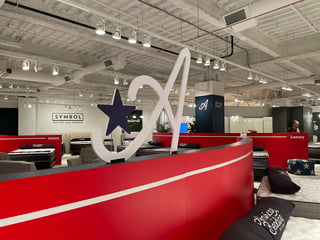
Elevating the In-Store Experience with Large-Format Signage

The physical store environment is a direct extension of your brand image. Vibrant, high-durability large-format graphics capture consumer attention and transform retail interiors into engaging visual experiences. High-impact applications include:

  • Exterior Window Wraps & Building Graphics: Drive foot traffic from passerby traffic.
  • Soft-Signage Fabrics & Architectural Wall Wraps: Add tactile depth and premium aesthetic appeal.
  • Dimensional Lettering & Illumination: Highlight key store departments and featured promotions.
  • Menu Boards & POS Directional Signage: Guide customer navigation and streamline purchase journeys.

Explore Large Format Solutions

Guaranteeing Uniformity with Certified National Installation

Even the best-designed signage can fall short when installation varies from location to location—crooked window wraps, mismatched wall graphics, or a local handyman replacing a certified installer. Asking store staff to manage installation on top of their day-to-day responsibilities only adds unnecessary liability, quality concerns, and operational burden.

Certified, insured national installation teams eliminate that burden by deploying trained crews to install complex storefront displays and interior graphics accurately and consistently across every market. Prisma brings that same nationwide coordination to large-scale rollouts, including the rebranding of an entire fleet of delivery vehicles to a consistent standard nationwide.

Operational Checklist for Retail and Consumer Executives

Standardizing National Campaign Preparedness

Executing seamless nationwide campaigns requires clear, structured operational milestones. Use this checklist to audit campaign readiness prior to launch:

Milestone Phase

Key Operational Tasks

1. Store Profile Audit

Dynamic profiles verified (dimensions, fixture count, local language needs).

2. Creative Lock-Down

Corporate templates finalized and locked inside the dokshop portal.

3. Data Cleansing

Mailing lists pre-scrubbed through CASS™ and NCOA Link® databases.

4. Kit Verification

Custom store-level packing audits completed at central facility.

5. Logistics Dispatch

Guaranteed drop-dates scheduled with unified freight logistics.

6. Installation Routing

Certified national installation teams dispatched and scheduled.

How to Choose a Retail Supplier: What to Look For in a Partner

Implement a standardized scorecard for procurement officers and retail operations leaders. Evaluate potential production and logistics partners across the following critical capabilities:

  • Large-Format Capabilities: Look for providers with high-capacity digital and grand-format presses capable of manufacturing durable, vibrant window wraps, architectural fabrics, soft signage, and dimensional exterior displays.
  • Dynamic Store Profiling: Ensure the partner manages a centralized, dynamic store database that maps fixture counts and exact measurements to prevent material waste and sizing errors.
  • Precision Direct Mail Analytics: Seek integrated data-driven direct mail capabilities paired with CASS/NCOA address cleansing to target high-value local demographics and optimize postal spend.
  • Web-Portal Governance: Priority should be given to partners offering centralized, lockable print-on-demand portals with custom spending caps, multi-tier approval workflows, and co-op budget controls for store managers.
  • Turnkey Kitting & Certified National Installation: Require single-source execution that combines custom store-level kitting, nationwide logistics tracking, and certified, fully insured field installation teams under a single SLA.

Frequently Asked Questions

Does Prisma handle professional installation for large-format graphics and signage nationally?

Yes. Prisma provides turnkey national installation services utilizing certified, insured installation professionals across the country. This guarantees that complex large format graphics, window wraps, exterior signage, and architectural displays are installed safely, correctly, and uniformly across all store locations without relying on local store staff.

How does dynamic store profiling differ from traditional static distribution lists?

Static distribution lists rely on flat spreadsheets that often fail to account for store-level physical differences, leading to wrong-sized graphics and wasted materials. Dynamic store profiling maintains a live database of exact physical dimensions, fixture layouts, storefront configurations, and regional requirements for every store in your network, ensuring every location receives custom-tailored campaign assets.

How does dokshop ensure local store managers don't violate brand guidelines?

Dokshop utilizes lockable creative templates where corporate marketing locks non-negotiable brand elements such as logos, core imagery, fonts, brand colors, and legal disclaimers. Store managers can customize pre-approved text fields—such as address, local pricing, or hours—allowing localized customization without risking brand drift or non-compliance.